
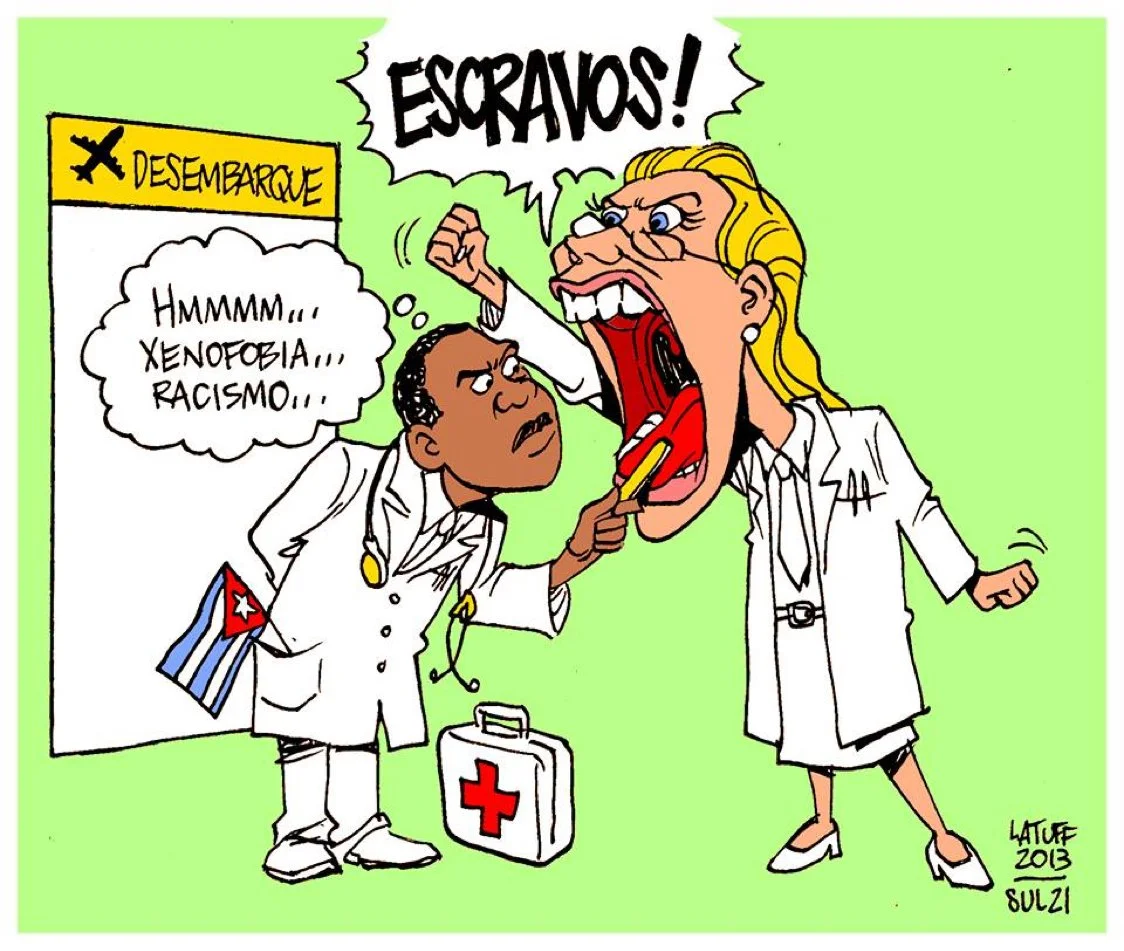
RACISM
“En Cuba, no hay racismo,” – Inés, ¡BIENVENIDOS BLANCOS!
Oh boy, here we go. Is there really not racism in Cuba?
Cuba’s history of racism began with the arrival of Spanish colonists who brought African slaves. Cuba did not abolish slavery until 1886 and they were the final Latin American country to do so.
132 years later, according to the Cubans involved in this production, racism in Cuba does not feel as noticeable in Havana as it does in the US. Yet, it is difficult to even get a clear statistic about race in Cuba today and naming race is sometimes considered taboo. However as the Council on Hemispheric Affairs explains, Castro’s policies “only addressed issues of unequal access without changing structural biases underlying society.” Socialism resulted in reducing disparity between people of different races as education and health care became widely available and free. Race disparity, which is just one part of racism still exists for Afro-Cubans, who are disproportionately affected by Cuba’s economic struggles.
SAWYER: Well, first of all, there tended to be still a glass ceiling at the highest ministries even under Castro having eliminated racism. Second, as the Soviet Union collapsed, and there’s been less Soviet subsidies in a more market-based economy, Afro-Cubans have fallen behind both because they’re discriminated against in the market-based economy and because a big part of the economy depends upon remittances.
And most of those who went to the United States were white, and they send money back to their white relatives. And there wasn’t a continued discussion about prejudice in the country. So you see a lot of things that were done by declaring racism eliminated and not having constant pressure groups in the way that we do in the United States to keep improving things and to hold Fidel’s feet to the fire.
Mark Sawyer, 2016 interview, listen or read more here.
At least one well known revolutionary would agree with our Inés character about the lack of racism in Cuba today. José Martí stated that there is no racism in Cuba because there are no races. In this 1891 essay “Nuestra América,” Martí argued that Cuban unity depends on Cubans identifying as Cubans, instead of identifying as different races. The sentiment that “we are all Cubans” can be misleading and erases the affect of hundreds of years of systemic racism explained in this way:
the legacy of slavery lingered, and was exacerbated by Cuba’s semi-colonial status under U.S. hegemony. Interactions with wealthy, white, prejudiced visitors from the U.S. contributed to social and economic divisions along racial lines. Afro-Cubans endured segregated facilities, discrimination under the guise of eugenics, and blatant racism at the hands of groups as extreme as the Ku Klux Klan Kubano. Naomi Glassman, 2011
More examples of how racism exists in current Cuba are explored in this article:
Even the dominant Cuban terminology signals the issue’s knotty intricacy: the decidedly un-PC term mulatto is used tenderly in conversation, defiantly on official documents, and derisively by the concerned neighbor who asks what color skin a robber had. – Julia Cooke, Al Jazeera
As of 2020, perhaps the tide may be turning. Rather than continuing a culture of silence around discussing race or pretending the Castro’s 1959 initiative had indeed eliminated racism, the current administration is actually talking about racism:
“Everyone recognizes our revolution has been the social and political process that has possibly done most to eliminate racial discrimination,” state-run media quoted President Miguel Diaz-Canel as saying.
Whether the current discourse will go anywhere has yet to be seen, but perhaps talking about this is a step.